Pedal assist helps while you pedal; a throttle requests motor power through a control. The better choice depends on how the particular bicycle starts, stops and responds, along with your route and willingness to pedal. Neither label alone tells you its legal category, range or quality.
Two electric bicycles can feel very different even when their battery capacity and advertised motor power look similar. The assistance sensor, controller settings, gearing, weight and fit all influence the ride. This guide explains the questions to ask during a demonstration so you can choose a useful system without treating a mode name as a complete specification.
Jump to a section7 sections
What the three basic modes actually mean
In pedal-only use, the rider supplies the propulsion through the drivetrain. Pedal assist adds electrical support in response to pedalling, according to the system’s sensors and settings. A throttle provides a separate request for motor power; whether it works from a standstill, only while pedalling or only under other conditions is model-specific.
The Hero Lectro FAQ describes pedal, pedelec, throttle and cruise modes across its range. That is useful terminology, but it does not establish identical operation on every model. Ask for the manual for the exact bicycle and a demonstration of each control. A walking-assistance or cruise function should never be inferred from a button that merely looks similar.
Cadence and torque sensing are different ideas
A cadence sensor detects pedalling movement. A torque-based system measures rider effort, often alongside other inputs, to determine assistance. Controller tuning still matters: the sensor description does not tell you how smoothly a particular bicycle delivers power or how quickly assistance ends.
During a supervised demonstration, notice what happens when you begin pedalling gently. Does the support arrive progressively or as a sudden step? Can you maintain a comfortable slow speed? What happens when you stop pedalling? Ask the dealer to explain the approved stopping behavior and any brake cut-off system rather than experimenting near pedestrians or traffic.
A smoother response can be valuable in a crowded parking area, but this is a fit-and-control observation, not a ranking of all sensor types. A well-configured simple system may suit a short commute. A more sophisticated sensor does not compensate for an uncomfortable frame or poor brakes.
Compare your actual riding routine
| Your priority | What to check |
|---|---|
| Regular pedalling with help on climbs | Gearing, assistance response and comfortable pedalling cadence. |
| Gentle starts and low-speed control | How assistance begins, how it stops and whether the bicycle remains predictable. |
| Using less rider effort on some stretches | The exact throttle rules, sustained performance and resulting battery use. |
| A mixed commute with stairs or transport | Total weight, carrying practicality and operator rules, not just the motor modes. |
| Riding when assistance is unavailable | Unassisted pedalling, gearing and safe stopping without power. |
Do not assume throttle operation makes a bicycle suitable for someone who cannot safely control or balance it. Mounting, braking, turning and handling the vehicle still require appropriate ability. If the intended rider has a condition affecting control or balance, obtain suitable professional guidance rather than treating the throttle as a universal mobility solution.
How the choice affects range
Battery energy is used to provide whatever portion of the journey’s propulsion the motor supplies. If the rider contributes less mechanical effort while other conditions remain similar, the electrical demand can increase. But there is no fixed “throttle range penalty” that applies to every route and bicycle.
Consider a hypothetical 360 Wh of usable energy. At 9 Wh/km, the arithmetic is 40 km; at 12 Wh/km, it is 30 km. Those are teaching assumptions, not test results or assigned values for pedal assist and throttle. Actual consumption depends on speed, gradients, load, tyre condition, assistance settings and rider input. Read the energy and range guide for reserve planning and measurement boundaries.
When a seller quotes a range, ask which mode, load, terrain and rider contribution produced it. An advertised distance achieved with substantial pedalling should not be presented as proof of throttle-only distance. Keep a reserve rather than testing the last kilometre of a battery claim.
A useful demonstration checklist
- Ask the dealer to identify every control and the correct power-on and power-off sequence.
- Begin in the lowest suitable assistance setting in an approved safe area.
- Check gentle starts, comfortable steady pedalling and controlled stopping.
- Notice any delay between a control input and the motor response.
- Ask how the system prevents unintended assistance while mounting, parking or pushing.
- Try ordinary pedalling without motor assistance if the dealer confirms the procedure.
- Check the controls while wearing the gloves you expect to use.
Stop the demonstration if a brake, control or warning behaves unexpectedly. A test ride is a way to identify questions, not a place to override restrictions or test maximum speed. Ask about service support for the sensor, display, controller and throttle, since a failed inexpensive-looking control can still make a bicycle unusable.
Modes do not establish legal status
“Pedal assist,” “throttle,” “250 W” and “e-bike” are not interchangeable with a complete certification statement. Obtain the exact model’s documents and the basis of any claimed registration or licence exemption. Confirm uncertain requirements with the relevant transport authority. Do not remove a speed restriction or alter the controller to make a vehicle fit an online description.
Choose the whole bicycle
Use the electric bicycle buying guide to check frame fit, brakes, battery handling, load limits and local service. Then use this mode comparison to choose the assistance behavior that fits your route. The right electrical system should support a suitable bicycle, not distract from a poor one.
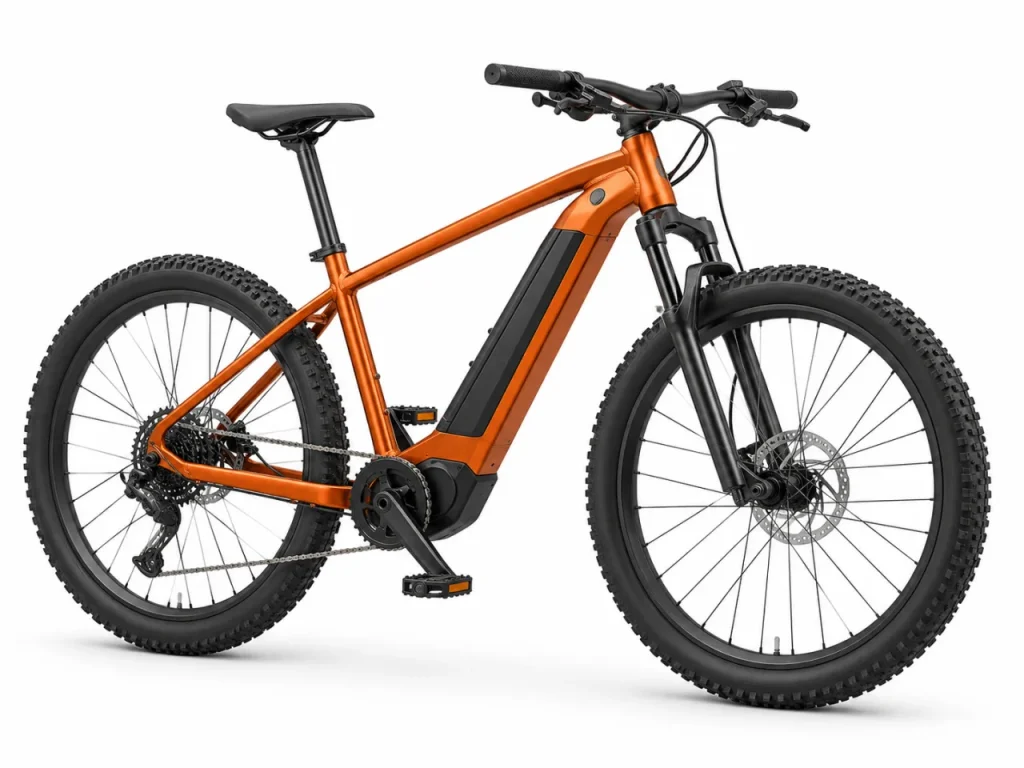
Checked 26 October 2026. Manufacturer mode names are attributed. The numerical example is hypothetical, and no bicycle was road-tested for this article. The featured image is a generic illustration.