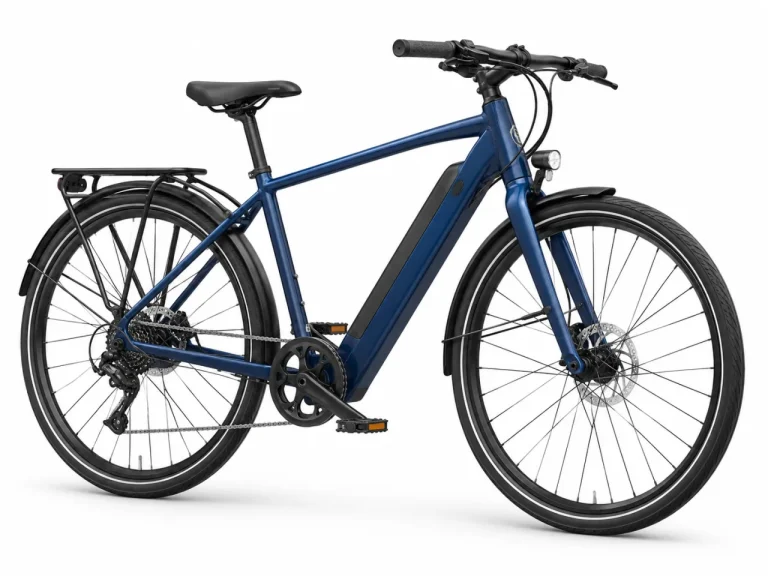
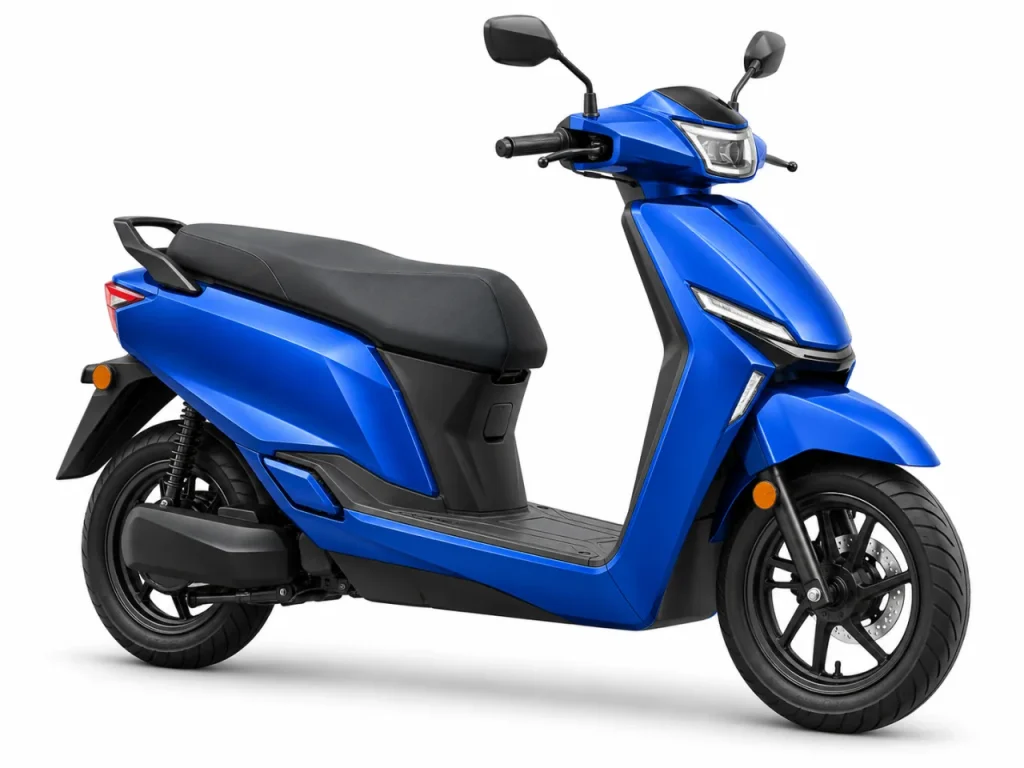
Use the manufacturer’s approved charger, follow the exact model’s instructions and have a competent electrician assess an uncertain circuit. Plan a dry, accessible charging location with safe cable routing before delivery. This guide is a planning checklist, not a wiring tutorial.
Home charging is often the part of electric two-wheeler ownership that makes daily use convenient. You return, connect the vehicle or approved removable battery and begin the next journey with a known starting point. But a practical arrangement involves more than finding a nearby socket.
The right questions concern the charger supplied with the vehicle, the capacity and condition of the circuit, protection and earthing, parking permissions, cable length, rain exposure and how electricity will be billed. Those details differ between an electric bicycle, a commuter scooter and a larger motorcycle. An answer for one charger is not automatically an answer for another.
Jump to a section8 sections
- Start with the exact charger label and manual
- Give the electrician a clear assessment brief
- Make apartment charging a written arrangement
- Understand removable batteries without assuming they are effortless
- Read charging-time claims carefully
- Estimate the electricity bill using wall energy
- Build a simple charging routine
- Know when the charging plan is not ready
Start with the exact charger label and manual
Ask the dealer for the charger model, input requirements, installation instructions and the socket specified for your variant. Distinguish a portable offboard charger from an onboard charger that uses a supplied cable. A vehicle family can contain more than one arrangement, so avoid planning from a photograph of a different variant.
For example, Chetak’s model-specific charging FAQ distinguishes the onboard arrangement of the 3501 from offboard arrangements on other listed models, with different socket specifications. This demonstrates why the exact variant matters. It is not a recommendation to select a circuit breaker or wiring size from a website.
Check what is included in the quotation. A charging cable, a portable charger, a wall mount and an electrical installation are different items. Get the inclusion and installation scope in writing, including any distance limits or additional charges for your parking location.
Give the electrician a clear assessment brief
Provide the actual charger information and describe how long and how often it will be used. Ask the electrician to evaluate the supply, socket condition, earthing, protection, circuit loading and the physical route to the parking space. Explain what other appliances share the relevant supply and whether the area has experienced water entry or electrical faults.
India’s 2024 Ministry of Power charging-infrastructure guidelines cover private as well as other charging settings and reference the applicable safety and standards framework. Their existence does not certify an individual installation. The assessment still needs to match the equipment, site and current local requirements.
Do not improvise by removing earth connections, using damaged adapters, joining incompatible connectors or bypassing a protective device that trips. A repeated trip is a reason to stop using the setup and seek qualified assessment, rather than to install a larger protective device without understanding the fault.
Make apartment charging a written arrangement
Discuss the parking bay, cable route, permission to install equipment, ownership of the installation and who maintains it. Decide how energy use will be measured and paid for, and what happens if the parking allocation changes. Photograph the agreed location and keep the approval and installation paperwork with the vehicle records.
A cable should not become a trip hazard or obstruct access and escape routes. A socket near a stairwell is not automatically a suitable place to charge a removable battery. If a building offers a shared facility, ask about compatible chargers, access hours, billing, booking, protective equipment and who responds to a fault.
Where the arrangement depends on a shared parking position or another resident’s socket, test the practical availability before purchasing the vehicle. A recurring dispute about access can make an otherwise capable scooter a poor fit for the household.
Understand removable batteries without assuming they are effortless
VIDA describes removable charging options in its official charging information. That can be useful when the parking space lacks a practical supply, but the day-to-day handling needs its own assessment. Ask about pack weight, the number of packs, approved charging equipment and the instructions for safe removal and refitting.
Try the carrying route with the dealer’s help before treating removability as the solution. Consider stairs, handrails, doors, rain and a suitable indoor location. Keep the pack stable and protected from damage; do not balance it where it could fall or where children can disturb the connections.
Only remove a pack designed for owner removal. A fixed battery is not a DIY conversion project. If a pack is damaged, unusually hot, swollen, leaking or giving off an unusual smell, stop use, keep people away and contact the manufacturer’s service channel. For smoke or fire, move to safety and contact emergency services; do not continue charging or handle a failing pack.
Read charging-time claims carefully
Ask for the starting and ending percentages and the charger used. “Two hours to 80%” can mean a top-up from a specified starting point rather than a full charge from empty. Do not extrapolate a short charging rate across the entire battery: the system may reduce the rate as charging progresses or when conditions require it.
As an illustrative energy calculation, adding 1.8 kWh to a battery with an assumed average battery-side charging power of 0.6 kW takes three hours before allowing for changes in power or other constraints. Dividing by a charger’s maximum label rating instead of its actual average delivery can give an optimistic result. Use the manufacturer’s specified window and your observed routine for practical scheduling.
Plan a charging period that leaves flexibility. A household that arrives late and leaves early should check whether the available interval reliably restores the energy used on the demanding day, not merely on the easiest commute.
Estimate the electricity bill using wall energy
Battery capacity and metered electricity are not the same measurement. Some energy is used or lost during charging, and the household bill measures energy drawn from the supply. Use a suitable, safely installed measurement arrangement if you want a real figure; ask your electrician about an appropriate metering option rather than adding an unsuitable plug-in accessory.
For a hypothetical month, 800 km at an assumed battery-side 35 Wh/km uses 28 kWh for riding. At an illustrative 85% charging efficiency, wall energy is 28 ÷ 0.85, or about 32.94 kWh. At an assumed ₹8/kWh, that is about ₹264. These inputs are examples, not a current local tariff or a measured scooter result.
Use your marginal tariff and applicable charges when estimating the bill. A bill’s average cost per unit can differ from the cost of adding another block of consumption. Our calculator shows the same arithmetic with editable inputs.
Build a simple charging routine
- Look for obvious damage, moisture or contamination before using the connector and cable.
- Use the manufacturer’s connection and disconnection sequence for the specific vehicle.
- Place portable equipment as instructed, with ventilation and without covering it.
- Check that charging starts normally and that no warning or abnormal condition appears.
- Follow the manual’s guidance when charging is complete and for periods of non-use.
A universal rule such as “always stop at 80%” is not a substitute for the vehicle’s instructions. Different systems have different usable buffers, balancing routines and storage guidance. Likewise, do not assume that the same battery percentage is appropriate for daily commuting and for leaving the vehicle unused for several weeks.
Know when the charging plan is not ready
Pause the installation if permission is unclear, the cable would cross a public walkway, the socket is damaged, the area floods or no one has assessed an uncertain supply. Stop charging if there is arcing, a burning smell, excessive heat, repeated tripping or a manufacturer warning. Describe the symptoms to the service provider and electrician without repeatedly retrying a suspect setup.
A good installation handover should leave you with the equipment details, the responsible installer’s information, an explanation of normal operation and a clear fault-reporting route. Once those basics are settled, charging can become an ordinary part of the daily routine rather than an improvised task each evening.
Research checked 26 October 2026. Electrical work and fault diagnosis require competent professionals. Manufacturer-specific examples explain planning differences; they do not prescribe wiring, protection ratings or a universal charging procedure.