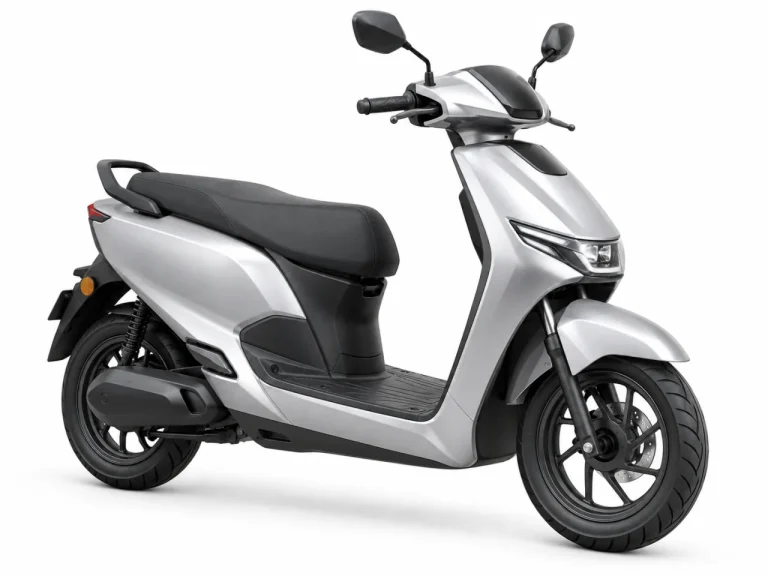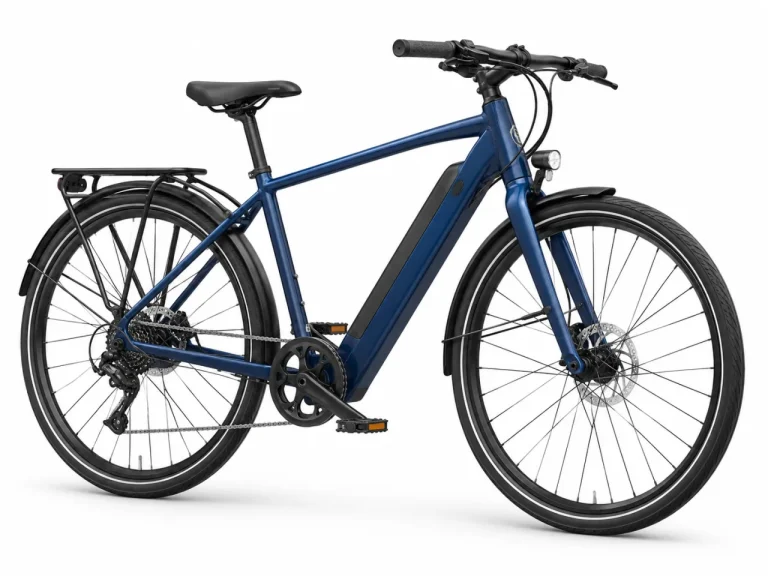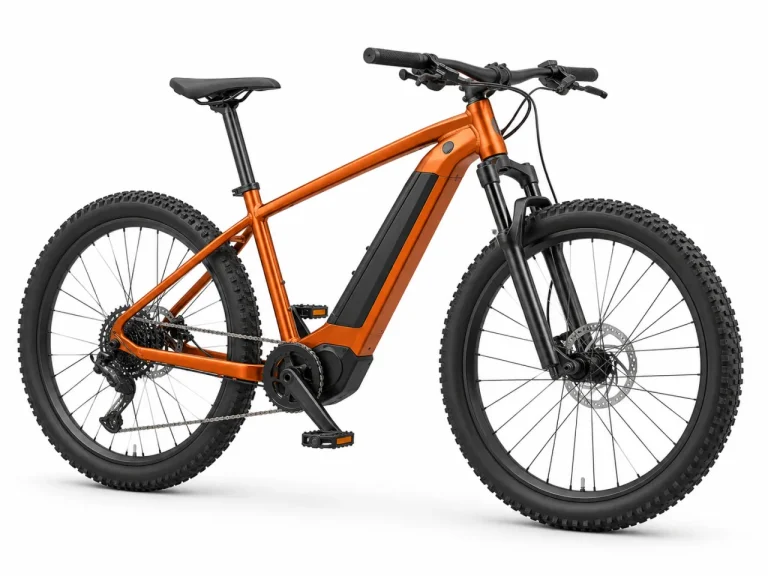
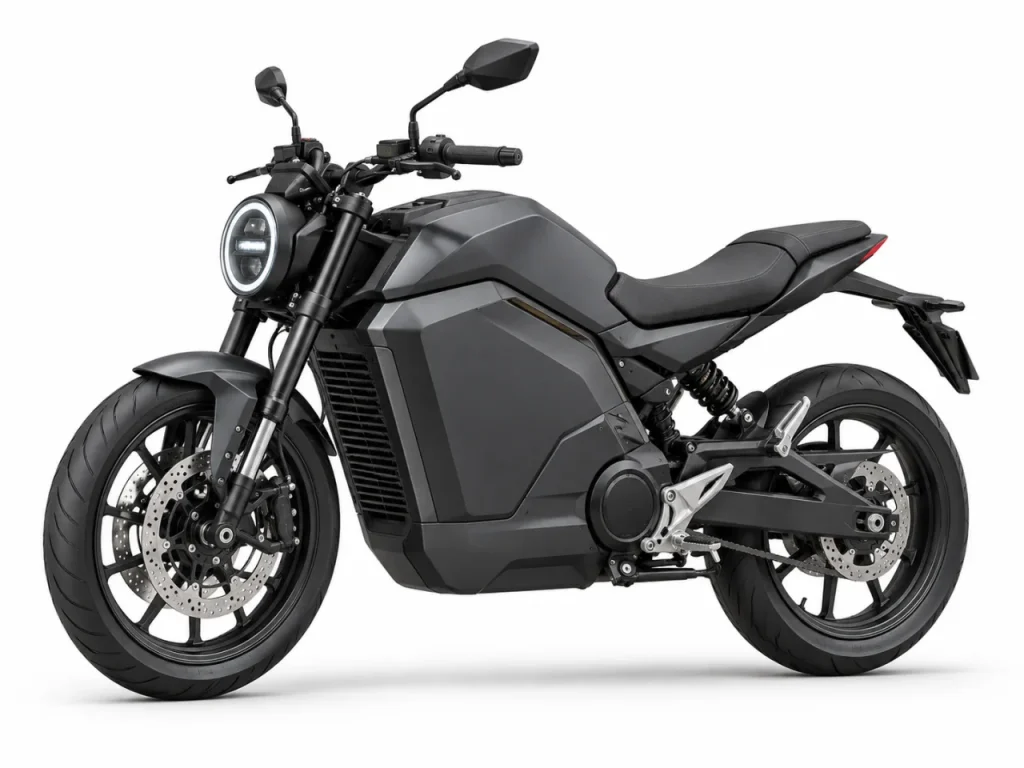
An electric motorcycle needs to suit your road speeds, riding position, charging access and service network. Compare commuter and performance motorcycles as different use cases. A battery-range claim or acceleration figure alone cannot show whether either is a sensible daily vehicle for you.
The electric motorcycle market contains machines with very different purposes. Some prioritise straightforward commuting and a removable battery. Others combine larger battery systems with performance-oriented chassis and equipment. The word “electric” does not make their running costs, charging requirements or handling interchangeable.
This guide helps you organise a shortlist for India without pretending that a desk comparison is a road test. We use manufacturer examples to explain the decisions, and original hypothetical calculations to show the trade-offs. Obtain a current, dated specification sheet for the exact variant before comparing or booking.
Jump to a section8 sections
- Separate three kinds of journey
- Compare battery systems, not just motorcycle names
- Understand why road speed changes the range question
- Test riding position and low-speed control
- Plan the charging stop as a complete event
- Read warranty promises alongside the actual certificate
- Compare ownership costs on equal terms
- Decide what the motorcycle must do well every week
Separate three kinds of journey
A predictable local commute is the simplest case to plan. You know the return distance and can often charge at the same place. A mixed city-and-faster-road commute requires evidence that reflects the more demanding sections. Occasional intercity travel is a separate planning exercise involving charger compatibility, access hours, stops, fallback routes and the roads on which your vehicle is permitted.
Do not assume every highway or expressway permits motorcycles. Check the rules for the actual route. Equally, an impressive top-speed specification does not establish comfortable sustained performance, usable range at that speed or permission to use a particular road. A safe test ride on an authorised route is for assessing fit and controllability, not for attempting a maximum-speed run.
Write down the longest regular return journey, the likely load, your reliable charging locations and the days when an unplanned detour is common. Consider whether a second transport option is available. That backup can make an occasional edge case manageable, but it should not be hidden when calculating the vehicle’s true usefulness.
Compare battery systems, not just motorcycle names
Revolt’s current RV400 product page identifies a 3.24 kWh battery, a manufacturer-claimed 150 km IDC range and a removable charging arrangement. These are specification claims, not VoltRoute measurements. They illustrate a commuter-oriented configuration in which pack removal can be part of the ownership routine.
Ultraviolette’s F77 material describes a different class of battery and charging equipment. Its web pages can vary by market and test standard, so match the India-market variant and warranty document rather than combining an export specification with an Indian quotation. A large pack may offer more planning flexibility while also influencing vehicle weight, cost and charging time.
Ask for total and usable battery capacity where available. Confirm whether the battery is customer-removable, which charger is supplied and whether quicker charging requires additional hardware. A motorcycle with an integrated pack must be parked where the approved charging connection can reach it safely; carrying the entire vehicle upstairs is not a realistic substitute.
Understand why road speed changes the range question
Range is available battery energy divided by energy used per kilometre. Consider an entirely hypothetical motorcycle with 6 kWh allocated to a journey after your chosen reserve. At 50 Wh/km, the arithmetic gives 120 km. At 75 Wh/km, it gives 80 km. The battery has not changed; the assumed consumption has. These figures are not estimates for the RV400 or F77.
Wind, gradients, rider and luggage load, tyre condition and riding style complicate the calculation further. A stated test-cycle range should not be treated as a guaranteed distance at your normal cruising speed. Look for route-relevant independent evidence where available and document the conditions. If you cannot find suitable evidence, keep the uncertainty visible instead of replacing it with a confident conversion factor.
Our range planning guide explains how to build a usable margin. The same energy accounting applies to motorcycles, but the consumption inputs should come from the motorcycle and journey you are evaluating.
Test riding position and low-speed control
Sit on the motorcycle with your usual protective equipment. Check handlebar reach, wrist pressure, knee bend, foot-control position and mirror visibility. Riders with similar heights can have different leg and torso proportions, so seat height alone is not a complete fit assessment. A dealer-assisted fit check is more useful than a specification copied from a brochure.
Before moving, assess how you manage the weight when lifting the vehicle from its stand, pushing it backwards and turning it in the space you actually have. Check the manufacturer’s instructions for any parking-assist feature. Powered assistance may be useful, but you should understand what happens when that feature is unavailable.
During the permitted ride, concentrate on progressive throttle response, normal braking, predictable regeneration and easy control at low speeds. Ask the dealer to explain the fitted braking and stability systems; names such as ABS or traction control describe particular functions and do not guarantee safety in every condition. Do not practise emergency manoeuvres in traffic to evaluate a purchase.
Plan the charging stop as a complete event
A charging claim is incomplete without the charger, starting and ending state of charge, and conditions. A 20–80% time is not a 0–100% time. The final part of charging can behave differently from the earlier part, and a headline rate should not be assumed to continue throughout the session.
Ultraviolette’s Boost Charger listing identifies compatibility for specified models. The ownership lesson is to verify the exact approved accessory and electrical supply. Do not assume that a connector which appears to fit, or a charger displayed on a map, is suitable for your motorcycle.
For public charging, include the time to reach the location, gain access, authenticate, queue if necessary, connect, charge and leave. Confirm whether you need an account, a compatible app or mobile data, and what the current tariff includes. Keep a realistic alternative; a map pin is not proof that a charger will be operational or accessible when you arrive.
Read warranty promises alongside the actual certificate
Warranty headlines change over time and may describe a standard policy, an optional extension or a promotional package. Ask the dealer to identify the document attached to your vehicle and purchase date. Check the battery health threshold, time and distance limits, exclusions, service requirements and transfer rules. Also identify coverage for the charger, controller and other major electrical parts.
Revolt’s current RV400 page describes an eight-year/80,000 km battery warranty and a 70% health threshold, while older web material may describe a different arrangement. The correct response to that conflict is to request the applicable certificate, not to silently choose whichever headline is more attractive. Our warranty guide includes a document checklist.
Obtain an answer about transport to the workshop, service booking and replacement-part availability. A national dealer count is not a measurement of the support available in your town. Where possible, speak to the authorised workshop that would actually receive your motorcycle.
Compare ownership costs on equal terms
Build two columns for each shortlisted vehicle. The first contains upfront costs: the complete on-road quote, protective equipment you still need, charging installation, approved accessories and any optional warranty. The second contains recurring costs: energy, insurance, service, tyres, subscriptions and finance charges where relevant.
Do not compare an electric motorcycle’s electricity bill with the entire ownership cost of a petrol motorcycle. That makes the difference look larger than the comparison supports. Likewise, avoid treating a hypothetical battery replacement as an inevitable bill in a particular year. Request a current service quotation and explore that as a separate risk scenario.
| Your priority | Evidence to collect | Reason to pause |
|---|---|---|
| Daily commuting | Route distance, approved home charging and local workshop. | The normal journey relies on an uncertain public charger. |
| Apartment ownership | Pack weight/removal or a permitted parking connection. | The charging plan requires unsafe cables or impractical lifting. |
| Occasional longer trips | Compatible stops, access hours and fallback routes. | A single unavailable charger would leave no workable alternative. |
| Performance-oriented riding | Fit, braking-system specification and appropriate training. | The decision depends only on a claimed acceleration number. |
Decide what the motorcycle must do well every week
A commuter may be better served by manageable weight, a convenient charging arrangement and dependable nearby service than by a larger maximum-range claim. A rider planning regular longer journeys may value charging flexibility and route evidence more strongly. Neither conclusion ranks an entire brand; it matches a particular vehicle to a particular routine.
Keep the written shortlist, complete quotations and documents together. If the important answers are still vague at the point of payment, there is no need to substitute enthusiasm for evidence. A useful electric motorcycle purchase is one whose ordinary week works comfortably, with a credible plan for the difficult week as well.
Research checked 26 October 2026. Product details are attributed manufacturer claims. No motorcycles were ridden for this guide, and the energy examples do not predict the performance of a named model.