A rainy commute tests more than a battery enclosure. Reduced visibility, slippery markings, hidden potholes and a wet parking socket can change an otherwise easy journey. This guide helps you make an owner-level monsoon plan without opening electrical components or assuming that every electric scooter has the same protection.
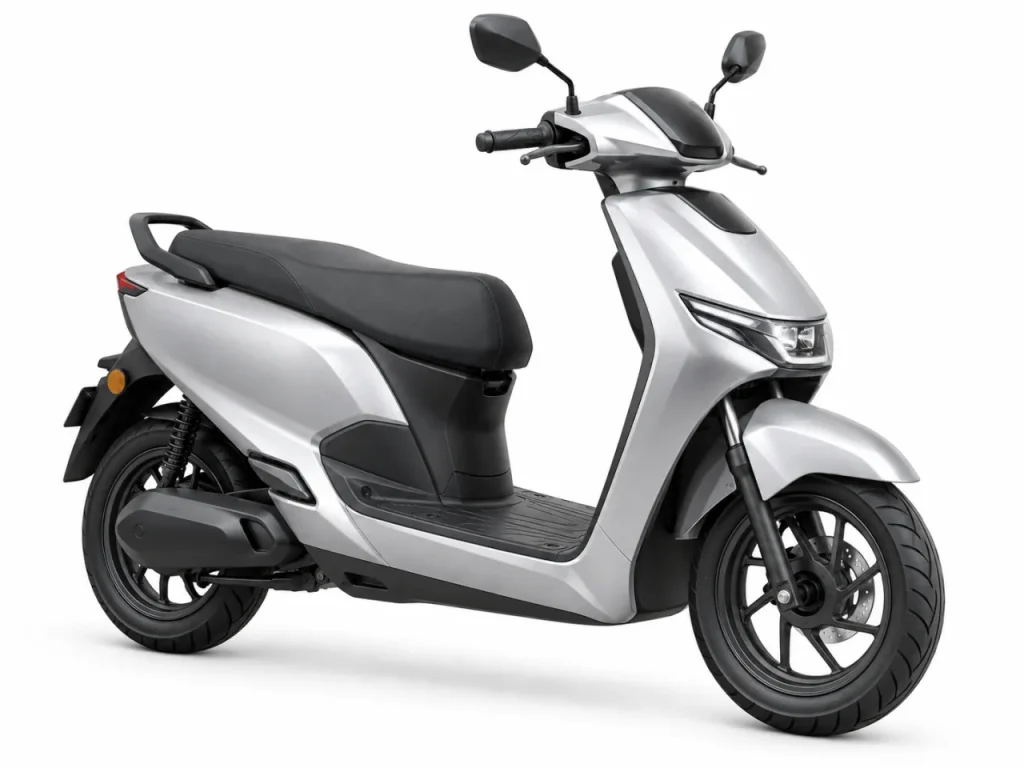
These are research-based planning suggestions, not a road test or a repair procedure. The featured vehicle is a generic illustration. Your vehicle handbook and instructions from its manufacturer take priority for operating limits, inspection and servicing.
Jump to a section8 sections
Start with the handbook for your exact scooter
Find the manual matching your model, variant and model year. Record the instructions for rain, washing, parking, charging and what to do after water exposure. If a dealer gives an assurance such as “completely waterproof,” ask which component and conditions the written document actually covers.
For example, Chetak’s official FAQ discusses charging conditions and model-related water protection. That is a useful starting point for a Chetak owner, not permission to apply the same limits to another scooter. Owners can also consult the TVS user-manual directory for the appropriate vehicle handbook.
An ingress-protection statement has a defined scope. A rating quoted for a battery does not automatically describe the display, connectors, accessories or a charger. Age, damage and incorrect repairs can also affect the condition of seals. Do not turn a rating into a guessed safe flood depth.
Check the ordinary riding equipment first
Inspect tyres for damage and wear, and check cold pressure against the vehicle’s specified load conditions. There is no universal monsoon pressure adjustment suitable for every scooter. Ask a competent workshop to assess questionable tyres instead of reducing pressure based on a social-media tip.
- Check that both brakes operate normally and investigate any change in feel or stopping behaviour before commuting.
- Confirm that the headlamp, tail lamp, brake lamp and indicators work. Clean lenses without scratching them.
- Set mirrors before moving and use protective riding equipment that preserves visibility and movement.
- Secure luggage so it cannot move into a wheel or obstruct lamps. Keep the load within the manual’s limits.
Practise your normal controls in suitable conditions before a wet journey. Rain is a poor time to discover an unfamiliar riding mode or an accessory interfering with a lever.
Choose a route with an exit plan
A slightly longer route with known drainage and safe stopping places may be more practical than the shortest route through an underpass. Check local conditions before departure, especially if your return journey falls during heavier rain. Leave time to wait or use another form of transport.
Avoid water when its depth, road surface or flow is uncertain. Another vehicle crossing does not prove that your path is safe. Floodwater can hide open drains, damaged surfaces and debris; the decision involves road safety as well as electrical protection.
Use smooth inputs and allow more room to respond to traffic. Painted markings, metal covers and loose material deserve particular attention. Do not experiment with hard braking, traction limits or abrupt regenerative-braking settings on a wet public road.
Make charging a dry, planned activity
Before the monsoon, have the charging arrangement reviewed if the socket, cabling or parking location is exposed to rain. A qualified electrician should assess the installation and protective arrangements using the manufacturer’s requirements. An improvised plastic covering is not a substitute for a suitable installation.
Inspect accessible cables and plugs externally. Do not connect wet, damaged or contaminated equipment. Follow the manual’s cleaning and drying procedure, and use the approved charger and charging location. Keep leads out of puddles, walkways and places where doors or tyres can damage them.
If water has reached an electrical supply or damaged charging equipment, avoid contact and obtain qualified assistance. Do not open the charger, bypass protection or repeatedly retry a connection that reports a fault. Our home-charging guide covers the broader parking and installation discussion.
What to do after unusual water exposure
Distinguish an ordinary ride within the manual’s operating conditions from immersion, a fall into water or a new warning after exposure. If the scooter has been submerged or behaves abnormally, stop using it and contact the manufacturer or authorized service provider. Do not attempt to restart or charge it simply to see whether it still works.
Describe where water reached, whether the scooter was operating, and which warnings appeared. Take photographs only from a safe position. If there is smoke, unusual heat or another immediate hazard, move away and contact local emergency assistance; do not handle the battery.
Arrange recovery according to the manufacturer’s instructions. A vehicle that switches on is not necessarily cleared for continued use after immersion. Leave internal inspection and electrical assessment to trained personnel.
Build a simple monsoon routine
| When | Useful owner check | When to seek help |
|---|---|---|
| Before a journey | Tyres, brakes, lights, weather and route | New damage, abnormal braking or warning indicators |
| Before charging | Dry, intact approved equipment and a suitable location | Water exposure, damaged leads or repeated charging faults |
| After parking | Visible debris and external condition, following the manual | Immersion, unusual heat, smell or electrical behaviour |
| At service | Report exposure and symptoms accurately | Request written inspection findings and repair scope |
Clean only as the manual allows. Avoid directing high-pressure water at electrical parts, bearings and seals. Store the scooter in a suitable place and do not cover a wet vehicle in a way that conflicts with manufacturer instructions.
Warranty and insurance are separate checks
Keep the warranty terms, insurance schedule and service records accessible. Coverage for a manufacturing defect is a different question from coverage for accidental water damage. The answer depends on the actual contract and circumstances; a general water-resistance statement is not a promise that every claim will be accepted.
Ask the provider about the applicable process before authorizing repairs, and retain invoices and photographs. See our battery-warranty checklist for questions to put in writing.
Sources and research notes
Manufacturer references linked above were consulted on 26 October 2026. This article provides a planning checklist rather than a universal wading limit, electrical repair guide or guarantee of coverage. Recheck the current manual for your exact scooter.